
In Conversation
The child comes first: Silke Bührmann and Patricia Bergès in conversation
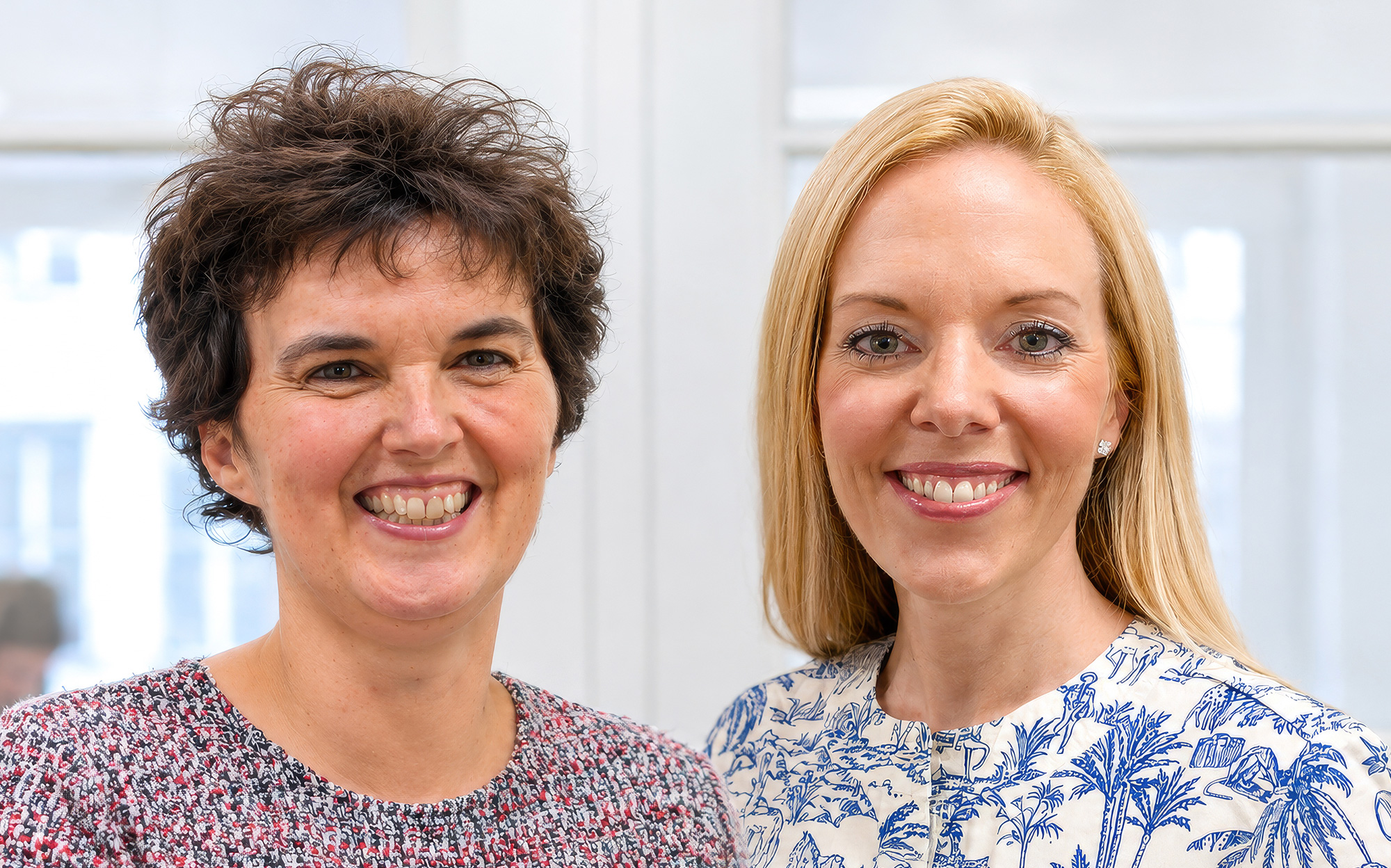
Silke Bührmann is responsible for pedagogy and education at globegarden, Patricia Bergès for accounting. Both are members of the management board and have been there almost from the start. A conversation about how pedagogy and numbers come together at globegarden, what good quality means in everyday life and how to say thank you to employees. The conversation took place in November 2026.
How did you come to globegarden?
Silke: I've been here since 2012, practically from the beginning. Back then, globegarden was still very small, and I started as a center manager. Today I'm on the management board, but my favorite place is still wherever the children are. My path isn't unusual here: every new center creates new leadership roles, and many of them are taken on by colleagues who started with us.
Patricia: For me, it was 2011. At that time, globegarden had only a handful of centers and was a real start-up. I came from Ernst & Young and wanted to leave the corporate world. Most people on the team were half my age, and I had two small children at home. But I was eager to roll up my sleeves. I built the entire accounting function from scratch, and along the way my children grew up. Today both have finished university. I knew the search for a daycare place from my own experience: my son only got a place when he was three. Fortunately, that has changed a lot in Switzerland since then.
How do pedagogy and numbers work together at globegarden?
Silke: Very well, because it's clear what comes first: the child. For many years, our area and regional managers have come from pedagogy. We decided that in our very first years. We support them in leading a team and planning well. And when it really matters, they decide for the child.
Patricia: That's why responsibility for the centers lies with them, not with us in accounting. We give them the figures they need to plan well.
Silke: We like to say: the child comes before the paperwork.
Do you visit the centers too, as a numbers person, Ms Bergès?
Patricia: As often as I can, because I love it. I'm interested in who works in our centers, from the apprentice to the center manager: Where do they come from, what have they experienced, and why do they feel at home at globegarden? Everyone brings their own story.
Silke: And Patricia remembers everything. When she comes back from a center, she often knows more about the team than I do.
What was it like to move from the world of numbers to a world full of children?
Patricia: To be honest, I was curious. Before, I had worked mainly with numbers, in teams with lots of men. At globegarden, I suddenly found myself almost only among women, and I had my preconceptions. They were gone within a few weeks. People here roll up their sleeves, in the administration just as much as in the centers. Strong women who achieve a great deal and are very warm at the same time. I still love that today.
Where does globegarden invest?
Patricia: Above all in the centers and in the people who work there. globegarden is 100 percent family-owned. What we earn goes into fair salaries, the training of our more than 300 apprentices and the renewal of our centers. That's how globegarden has grown on its own strength to this day.
Silke: You can see it in the centers: new playgrounds, furniture and play materials, better acoustics in the group rooms. Parents hardly notice much of it, but our teams certainly do. Anyone who spends a whole day with a group of children is grateful for every slightly quieter room.
Patricia: For me, it's also a question of responsibility. A center should still be there for families and for the team in ten years' time. For that, it has to stand on solid ground.
How does globegarden make sure quality is right in every center?
Silke: It starts with attitude. As early as 2009, the founders said: the first years of life are also learning years. At the time, that was not a given in Switzerland; today, fortunately, most people see it that way. In practice, every center follows a shared quality standard that we developed with colleagues from the centers. On top of that come our own education plan, careful onboarding and training at our education academy. Anyone who wants to build something of their own beyond that is warmly invited to do so. In the end, though, it's not the concepts that create quality, but the people who bring them to life.
Patricia: And Silke has a special talent: children tell her everything. When she comes into a center, she soon knows who has a new baby brother or sister, who has just lost a tooth and what was for lunch. I think the children simply notice that she really listens.
Silke: Children are the most honest conversation partners you could wish for.
What stayed with you from the Covid period?
Silke: How long-term the founders think. While many had to cut back, we kept investing in the centers: in renovations, playgrounds, our education plan and our education academy with 130 courses a year. It was a good feeling to know that there were enough reserves and that we would get through that time well. That's what I call sustainable.
Patricia: We owe that to careful planning in the years before.
How does globegarden say thank you to its employees?
Silke: In a way I haven't experienced with any other employer. Twice a year, we have a month of appreciation. In October, parents nominate caregivers for our awards, each for one of our values, and write why that person has made a difference in their family's life. We present the awards at our Christmas celebration. One caregiver once said it felt a bit like the Oscars.
Patricia: And afterwards, the teams read what the parents wrote. Hardly an eye stays dry, not even in accounting.
What's on the table in the centers?
Silke: In all our centers, meals are freshly cooked on site every day: breakfast, lunch and afternoon snack. In our last large parent survey, 92 percent praised the healthy, fresh food. And anyone who's still hungry gets a second helping.
Patricia: We have been getting our food from Coop for more than 15 years. In general, we have worked with many partners since we were founded. I think that says a lot about globegarden: we build relationships that last, with families, with employees and with partners.
Silke: The best feedback on the food comes at pick-up time. When there were Älplermagronen, the Swiss mountain pasta, some children don't want to go home at all.
Patricia: And the next day, the parents ask for the recipe.
What would you like to pass on to parents?
Silke: When you look at a daycare center, don't just look at the rooms, look at the people. How do they talk to the children, and to each other? That often says more than any concept.
Patricia: Dare to do both. When I started at globegarden, I had two small children and a job where everything was new. It wasn't always perfect, but it was worth it, for me and for my children.
Read more in our FAQ: What do children learn at globegarden? and How much do employees earn at globegarden? Patricia Bergès tells how she combines family and career in our book «brave not perfect». How it all began: The founders in conversation.